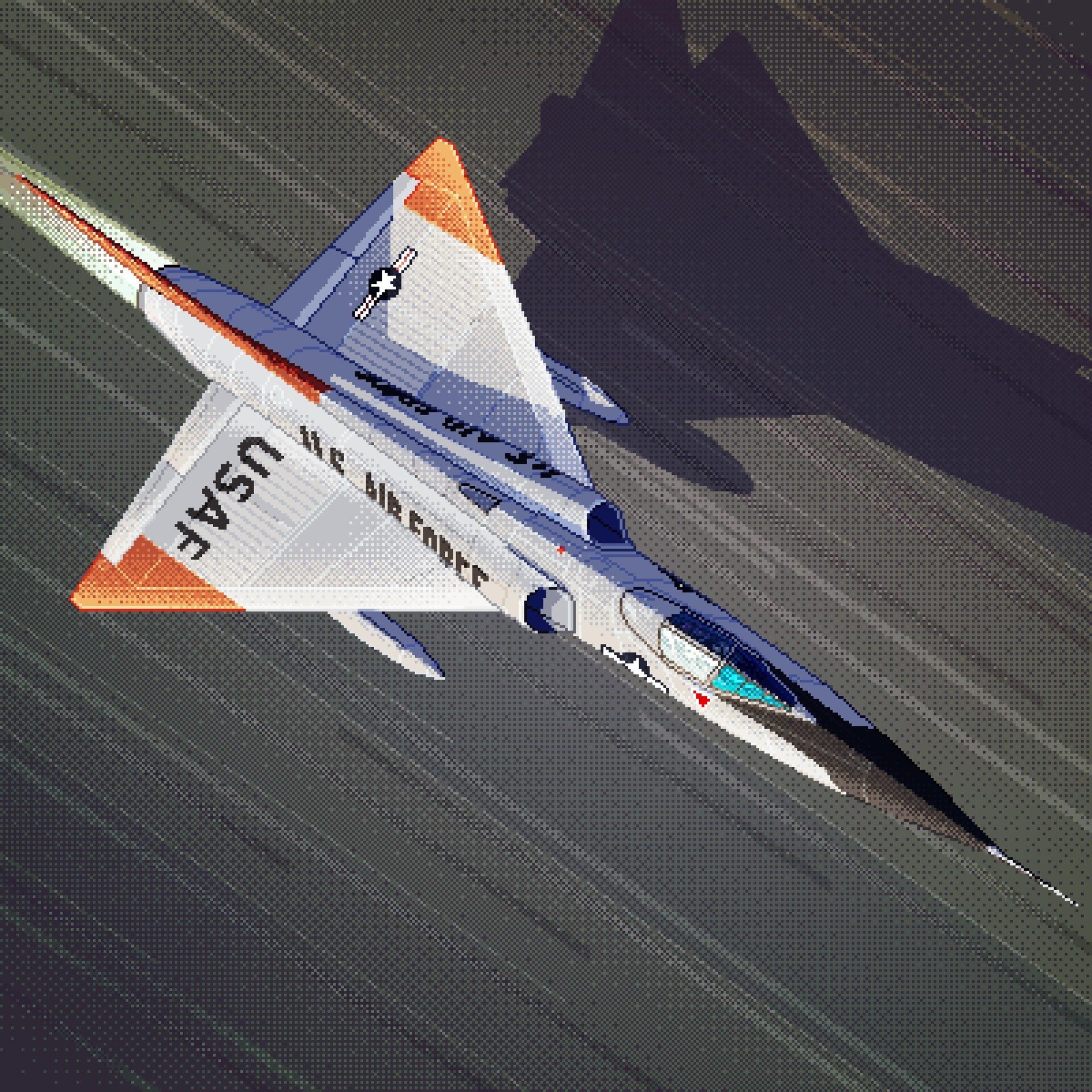
𝗙-𝟭𝟬𝟲 𝗗𝗲𝗹𝘁𝗮 𝗗𝗮𝗿𝘁
During the Cold War years, Convair’s delta-wing F-106A was the fastest and most lethal all-weather interceptor in the U.S. Air Force inventory. The F-106A, when lightly loaded, approached the magic 1-to-1 thrust-to-weight ratio, a characteristic coveted by fighter pilots everywhere. With a 24,500-pound-thrust afterburning Pratt & Whitney J75-P-17 engine pushing an airframe only slightly heavier than the engine thrust output, this 1950s-era airplane had an impressive initial climb rate of 30,000 feet per minute and a zoom-climb altitude above 70,000 feet. As a result of the “thermal barrier” created by friction heat on the ship’s skin and Plexiglas canopy, its airspeed was limited to Mach 2.31 (1,525 mph).
During its long service life, the F-106A had the distinction of recording the lowest single-engine aircraft accident record in USAF history. The Air Force began replacing its Delta Darts with McDonnell F-15s in 1981, keeping many in service as QF-106 target drones. The last F-106A was retired from the 119th Fighter Interceptor Squadron, New Jersey Air National Guard, in August 1988. Yet even today the Delta Dart could hold its own in the fighter training and combat arena, and Major Rogers’ speed record for a single-engine jet still stands. That’s quite an accomplishment for an airplane that first flew more than 60 years ago.
☁️
Text-Source: history.net